

The promise is alluring: a molecule that could sharpen your focus, protect your memory, and keep your brain functioning optimally as you age. In an era where "brain fog" has become a cultural touchpoint and cognitive decline looms as one of the most feared aspects of aging, it's no wonder that compounds like NMN (nicotinamide mononucleotide) have captured widespread attention.
NMN sits directly upstream of NAD+, a coenzyme essential for mitochondrial energy production, DNA repair, and cellular stress responses throughout the body—including the brain. And the brain, more than almost any other organ, is extraordinarily demanding of these processes. Even small disruptions in energy metabolism, blood flow regulation, inflammation, or DNA repair can manifest as slower processing speed, reduced focus, memory lapses, or the persistent mental cloudiness many describe as brain fog.
So the question is entirely reasonable: does NMN improve cognitive performance? But answering it rigorously requires separating three distinct layers of evidence: biological mechanisms (what NMN could plausibly affect), preclinical outcomes (what's been demonstrated in animal models), and human evidence (what has actually been measured in people). Let's examine each carefully.
What to know
- NMN is a direct NAD+ precursor that reliably increases blood NAD+ levels in human studies
- Animal studies show improvements in neurovascular function and cognition-related performance in aged mice
- Human trials consistently demonstrate NAD+ elevation, but direct cognitive improvements on validated tests remain limited
- The biological mechanisms linking NAD+ to brain health are well-established and plausible
- Current evidence supports "brain health optimization" rather than "cognitive enhancement" claims
Understanding NMN and its connection to brain function
NMN is an intermediate compound in the NAD+ salvage pathway—the body's primary route for recycling and maintaining NAD+ levels. When you supplement with NMN, you're essentially providing raw material for NAD+ production, which occurs in cells throughout the body, including neurons and supporting brain cells.
The core biological hypothesis behind NMN supplementation for cognitive function rests on NAD+ biology. Reviews published in high-impact scientific journals have established that NMN can raise NAD+ levels in multiple tissues in animal models, with brain-related effects often attributed to improved mitochondrial function and reduced age-related cellular dysfunction.
A crucial piece of this puzzle involves transport and bioavailability. Researchers have identified a specific transporter protein called Slc12a8 that facilitates intestinal NMN uptake, at least in mice. This discovery supports the biological plausibility of oral NMN supplementation increasing systemic NAD+ levels. However—and this is important—"systemic NAD+ increase" and "NAD+ increase specifically in brain tissue" are separate questions, with the latter being far more difficult to measure in living humans.
Why NAD+ biology matters for cognitive performance
Cognition isn't a single process—it's an emergent property of multiple interconnected systems, many of which overlap significantly with NAD+ biology. Understanding these connections helps explain why NAD+ has become such a focal point in cognitive aging research.
Mitochondrial energy production and neural function
Neurons and their supporting glial cells rely heavily on oxidative metabolism to generate the enormous amounts of ATP required for neural signaling, neurotransmitter synthesis, and cellular maintenance. The brain represents only about 2% of body weight but consumes roughly 20% of the body's energy.
NAD+ is absolutely required for the metabolic reactions that feed mitochondrial ATP generation—specifically, it's a critical electron carrier in cellular respiration. When NAD+ levels decline, mitochondrial efficiency can suffer, potentially affecting the energy-intensive processes underlying cognition.
Neurovascular coupling and cerebral blood flow
Healthy brain function depends on precise matching of blood flow to neural activity—a process called neurovascular coupling. When a brain region becomes active, local blood flow must increase rapidly to deliver oxygen and glucose while removing metabolic waste.
With age, neurovascular coupling can decline, meaning the brain becomes less efficient at directing blood flow where it's needed most. Research in animal models has associated this decline with worse cognitive performance. NAD+-dependent pathways appear to play a role in maintaining the cellular mechanisms underlying neurovascular coupling.
DNA repair and cellular stress responses
Brain cells accumulate DNA damage over time from normal metabolic processes, oxidative stress, and environmental factors. NAD+ is consumed by enzymes involved in DNA repair—particularly PARP proteins that fix breaks in DNA strands.
As damage accumulates with age, NAD+ demand from DNA repair processes can increase, potentially creating competition for limited NAD+ between repair functions and other critical cellular processes. This is one mechanism by which NAD+ decline might contribute to age-related cognitive changes.
Inflammation and cognitive aging
Chronic low-grade inflammation in the brain—sometimes called "neuroinflammation"—can impair both synaptic function (how neurons communicate) and vascular function (how blood reaches brain tissue). This inflammatory state has been linked to cognitive decline in numerous studies.
NAD+-dependent enzymes, particularly sirtuins, help regulate inflammatory pathways. When NAD+ levels are adequate, these regulatory systems function more effectively, potentially moderating age-related neuroinflammation.
"The biological rationale for NAD+ supporting brain health is robust—we understand the mechanisms well. What requires more research is translating those mechanisms into measurable cognitive improvements in humans. That's the difference between biological plausibility and clinical validation."
— Dr. Marion Gruffaz, PhD in Molecular Biology, Co-Founder of SolensisThese pathways are scientifically plausible and well-characterized. But plausibility, no matter how compelling, is not the same as proof of clinical efficacy. That requires actual outcome data.
What animal studies demonstrate
Preclinical research—studies in animal models—provides important mechanistic insights and helps establish biological plausibility before human trials. For NMN and cognition, several lines of animal research are particularly noteworthy.
Aged mice: neurovascular function and cognitive performance
One of the most frequently cited bodies of evidence comes from studies in aged mice showing that restoring NAD+ with NMN can rescue neurovascular coupling responses—the ability of brain blood vessels to dilate appropriately in response to neural activity.
What makes this research particularly compelling is that it connects NMN to a specific, measurable physiological mechanism relevant to brain health, rather than making vague claims about "brain energy." In these studies, improvements in neurovascular function were associated with better performance on cognition-related behavioral tasks.
This matters because neurovascular coupling decline is observed in human aging and has been linked to cognitive impairment. If NMN can help preserve this function, it provides a specific mechanism by which it might support cognitive health.
Disease models: Alzheimer's and metabolic brain impairment
Multiple preclinical papers have examined NMN in animal models of neurological or metabolic dysfunction, including:
- Alzheimer's disease mouse models reporting behavioral improvements with NMN administration
- Diabetes-associated hippocampal impairment models examining NAD+ precursors including NMN
- Models of age-related cognitive decline showing protective effects of NAD+ restoration
These studies provide valuable mechanistic insights and help establish biological plausibility. However—and this is a critical limitation—animal cognition tasks, while informative, do not reliably predict human clinical efficacy. Mouse maze performance doesn't automatically translate to improvements in human memory, executive function, or processing speed.
Important: Animal studies are essential for understanding mechanisms and establishing safety, but they represent hypothesis generation rather than clinical proof. The distance between "works in mice" and "works in humans" is substantial, particularly for complex outcomes like cognition.
What human studies actually show (and what they don't)
This is where scientific rigor becomes most important. When evaluating human evidence for NMN and cognition, we need to distinguish between what has been demonstrated and what remains to be proven.
What human trials consistently show: NAD+ elevation
Multiple human clinical trials have now confirmed that oral NMN supplementation can increase blood NAD+ levels or NAD+-related metabolites. This finding has been replicated across different study populations, doses, and durations.
For example, a 2024 dose-ranging study in generally healthy adults examined NAD+ responses across 300-900 mg/day for 60 days, documenting the dose-dependent increase in blood NAD+ concentrations. Other trials have shown similar results, establishing NAD+ elevation as a consistent, reproducible effect of NMN supplementation.
This is significant—it demonstrates that oral NMN is bioavailable and biologically active in humans. But NAD+ elevation in blood is not the same thing as cognitive improvement.
What human trials often measure instead of cognition
Many human NMN trials have focused on outcomes other than cognitive performance. For example:
- Physical performance measures (walking speed, aerobic capacity, muscle function)
- Metabolic parameters (insulin sensitivity, glucose metabolism)
- Subjective measures (fatigue, sleep quality, general wellbeing)
Some of these outcomes are relevant to brain health indirectly. For instance, one study in older adults reported improvements in sleep quality measures alongside increased blood NAD+. Since sleep quality profoundly affects cognitive function, this could be meaningful—but it's not the same as measuring cognition directly.
The evidence gap for cognitive outcomes
Here's the most important point for scientific accuracy: as of the currently published clinical literature, there is far less high-quality human evidence showing that NMN improves cognition on validated neuropsychological endpoints (memory, executive function, processing speed, attention) compared to the robust evidence that NMN increases blood NAD+.
This doesn't mean NMN has no cognitive effects in humans—it means those effects haven't yet been rigorously demonstrated in randomized controlled trials using validated cognitive test batteries. The absence of evidence is not evidence of absence, but it does mean we can't make strong claims about cognitive enhancement based on human data alone.
The most scientifically defensible statement based on current human evidence is:
- NMN reliably raises blood NAD+ levels in humans
- Some trials show improvements in related functional measures like sleep quality and physical performance
- Direct cognitive performance improvements on validated neuropsychological tests are not yet strongly established in published randomized controlled trials
This is not a "no"—it's a "not proven yet." The distinction matters enormously for scientific credibility.
Safety considerations and regulatory context
Any discussion of supplementation should address safety and regulatory status transparently.
Safety profile in human trials
Recent scientific reviews of NMN human trials, including a comprehensive 2023 analysis published in Advances in Nutrition, summarize safety signals as generally acceptable in the doses and durations studied. Common findings include:
- Good tolerability across doses ranging from 250-1,200 mg daily
- Minimal adverse events, typically mild and transient (occasional nausea, flushing)
- No serious adverse events reported in published trials
However, these reviews appropriately emphasize that broader populations and longer-term safety data are still needed. Most trials have been relatively short (weeks to months) and in generally healthy populations. Long-term safety in diverse populations remains an area requiring more research.
Regulatory status
NMN's regulatory status has been a topic of ongoing discussion. The FDA's position on NMN as a dietary supplement ingredient has evolved, with regulatory interpretations subject to change based on new information and legal arguments.
As of recent FDA documentation, NMN is not excluded from the dietary supplement definition under the relevant regulatory sections in certain contexts. However, the regulatory landscape for NAD+ precursors continues to develop, and anyone marketing NMN should stay current with FDA guidance.
It's important to note that dietary supplements are not FDA-approved for treating or preventing disease. They're regulated differently than pharmaceutical drugs, with different standards for marketing claims.
Evidence-based guidance for cognitive health
If someone is considering NMN specifically for cognitive support, what does the evidence actually support?
Setting appropriate expectations
Based on current evidence, it's more accurate to think of NMN as potentially "supporting brain energy metabolism and vascular health" rather than as a "cognitive enhancer" or "memory booster." The distinction matters:
- Supported by evidence: NMN raises NAD+ levels, which are important for mitochondrial function, DNA repair, and cellular stress responses in the brain
- Plausible but not yet proven: These metabolic improvements translate to measurable cognitive benefits in healthy humans
- Not supported by current evidence: NMN produces dramatic or immediate improvements in memory or mental performance
What the field needs next
To move from biological plausibility to clinical validation, we need:
- Randomized controlled trials using validated cognitive test batteries (not just subjective reports)
- Longer-duration studies examining sustained effects over months to years
- Studies in populations experiencing cognitive decline or at elevated risk
- Biomarker research connecting blood NAD+ changes to brain tissue changes in humans
Some of these studies may be underway, but until results are published and peer-reviewed, we should maintain appropriate scientific caution about claims.

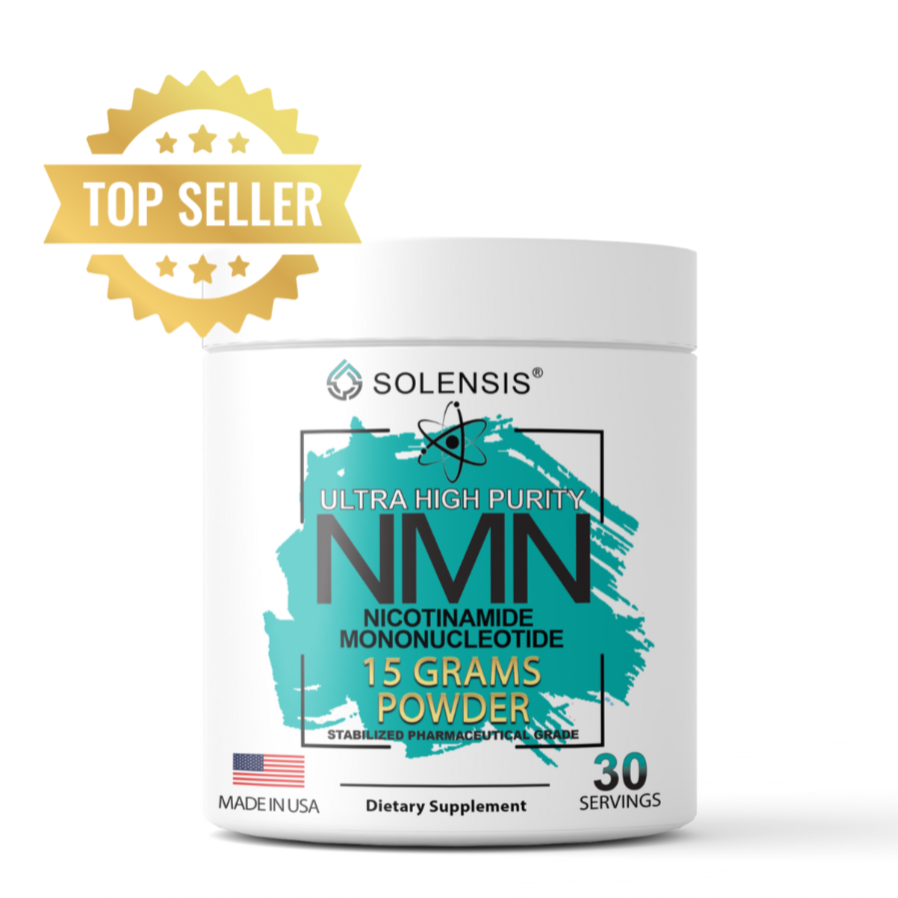
Premium NMN supplement
Pharmaceutical-grade NMN (≥99.9% purity) to support NAD+ levels, cellular energy metabolism, and healthy brain aging—independently tested and formulated at research-backed doses. Support your cognitive health at the cellular level.
Learn moreFoundations remain essential
No supplement, including NMN, can compensate for poor foundational health habits. The factors with the strongest evidence for protecting cognitive function remain:
- Quality sleep: Perhaps the single most important factor for cognitive performance and brain health
- Metabolic health: Insulin sensitivity and glucose regulation profoundly affect brain function
- Regular exercise: Both aerobic and resistance training show cognitive benefits
- Blood pressure control: Vascular health is intimately connected to brain health
- Social engagement and mental stimulation: Cognitive reserve matters
Think of NMN as potentially complementing these foundations, not replacing them.
Common questions about NMN and cognition
Does NMN cross the blood-brain barrier?
Direct human data on blood-brain barrier penetration are limited. Mechanistic reviews suggest that NAD+ can be increased in many tissues, and animal studies support brain-relevant effects, but whether supplemental NMN itself crosses the blood-brain barrier in humans, or whether its effects occur through systemic NAD+ elevation affecting brain metabolism indirectly, remains an active research question.
Does NMN improve memory?
In animal models, particularly aged mice, there are documented improvements in cognition-related behavioral tasks. In humans, NMN reliably raises blood NAD+ levels, but strong randomized controlled trial evidence for improved memory performance on validated neuropsychological tests is still limited. The biological mechanisms suggest potential, but clinical validation in humans is incomplete.
How much NMN would I need for cognitive effects?
Human trials have used doses ranging from 250 mg to 1,200 mg daily, with most studies in the 250-500 mg range showing reliable NAD+ elevation. However, since cognitive benefits haven't been definitively established in human trials, there's no validated "cognitive dose" to recommend. If considering NMN for brain health, starting with doses shown safe and effective for NAD+ elevation (250-500 mg daily) represents a reasonable, evidence-based approach.
Is NMN safe for long-term use?
Short to medium-term trials (weeks to months) consistently report good tolerability at doses up to 1,200 mg daily. However, truly long-term safety data (years of continuous use) in diverse populations remain limited. As with any supplement, consulting with healthcare providers is advisable, particularly for individuals with existing health conditions or those taking medications.
Bottom line: The evidence for NMN and cognitive function exists on a continuum. The biological mechanisms are well-established and plausible. Animal studies show promise. Human trials consistently demonstrate NAD+ elevation and some functional improvements. What's missing is rigorous human trial data directly measuring cognitive performance on validated tests. This gap doesn't mean NMN doesn't help cognition—it means we need better studies to know for certain.
Final thoughts: promise and prudence
NMN represents a fascinating convergence of basic science, translational research, and practical intervention. The biology linking NAD+ to brain health is compelling. The animal research is encouraging. The safety profile appears favorable. And the ability to raise NAD+ levels in humans is well-established.
What remains to be demonstrated definitively is whether these biological effects translate to meaningful cognitive improvements in human populations. That's not a criticism of NMN—it's an acknowledgment of where the evidence currently stands and what science still needs to establish.
For individuals interested in cognitive optimization and healthy brain aging, NMN represents a biologically plausible intervention worth considering as part of a comprehensive approach that includes the lifestyle factors with the strongest evidence base. But it should be approached with appropriate expectations: supporting the cellular foundations of brain health rather than producing dramatic cognitive enhancement.
As research continues to evolve, we'll gain clearer insights into NMN's cognitive effects in humans. Until then, maintaining scientific rigor in how we discuss the evidence isn't just about accuracy—it's about respecting both the science and the people who rely on it to make informed decisions.
References
- Kiss, T., Nyúl-Tóth, Á., Balasubramanian, P., Tarantini, S., Ahire, C., Yabluchanskiy, A., ... & Ungvari, Z. (2020). Nicotinamide mononucleotide (NMN) supplementation promotes neurovascular rejuvenation in aged mice: transcriptional footprint of SIRT1 activation, mitochondrial protection, anti-inflammatory, and anti-apoptotic effects. GeroScience, 42(2), 527-546. https://doi.org/10.1007/s11357-020-00165-5
- Igarashi, M., Nakagawa-Nagahama, Y., Miura, M., Kashiwabara, K., Yaku, K., Sawada, M., ... & Fukamizu, A. (2022). Chronic nicotinamide mononucleotide supplementation elevates blood nicotinamide adenine dinucleotide levels and alters muscle function in healthy older men. npj Aging, 8(1), 5. https://doi.org/10.1038/s41514-022-00084-z
- Yi, L., Maier, A. B., Tao, R., Lin, Z., Vaidya, A., Pendse, S., ... & Khasawneh, R. R. (2023). The safety and antiaging effects of nicotinamide mononucleotide in human clinical trials: an update. Advances in Nutrition, 14(5), 1416-1435. https://doi.org/10.1093/advances/nmad019
- Grozio, A., Mills, K. F., Yoshino, J., Bruzzone, S., Sociali, G., Tokizane, K., ... & Imai, S. I. (2019). Slc12a8 is a nicotinamide mononucleotide transporter. Nature Metabolism, 1(1), 47-57. https://doi.org/10.1038/s42255-018-0009-4
- Liao, B., Zhao, Y., Wang, D., Zhang, X., Hao, X., & Hu, M. (2021). Nicotinamide mononucleotide supplementation enhances aerobic capacity in amateur runners: a randomized, double-blind study. Journal of the International Society of Sports Nutrition, 18(1), 54. https://doi.org/10.1186/s12970-021-00442-4
- Shade, C. (2020). The Science Behind NMN–A Stable, Reliable NAD+Activator and Anti-Aging Molecule. Integrative Medicine: A Clinician's Journal, 19(1), 12-14.
- Verdin, E. (2015). NAD+ in aging, metabolism, and neurodegeneration. Science, 350(6265), 1208-1213. https://doi.org/10.1126/science.aac4854